
Midtown High School hosted its annual Curriculum Night last Wednesday night where parents rotated through their student’s schedule and attended each class for 15 minutes. Teachers are asked to introduce themselves, cover the basics of the class, and field any general questions (but this time is NOT to be used for parent-teacher conferences). We’re a month into school, so parents have already reviewed the syllabus and contacted me about any specific concerns. This year, instead of the usual, I decided to share my classroom core values, so parents could really have a peek into the ethos of our class, not just the operational aspects. Here are a few of ones that I highlighted for parents:

Learning in Community
If we learned anything from the pandemic, it’s that learning in isolation is not the best. I know some would argue that they prefer to just be given their work, knock it out on the computer, and get on with their day. I, however, would argue that we learn best when we have others around us to help us consider, question, and think – especially when we’re learning how to become better readers, writers, and thinkers. So much of our class is built around discussion and through our discussion we are learning together. Productive discussion can push us in our thinking, cause us to consider other perspectives, and allow us to synthesize ideas in a way that we couldn’t alone. The intentionality and emphasis on learning in community is a key factor from shifting transactional learning to more transformative learning. Another point to be made with this value is I am a part of the learning community – not just a disseminator of information – and learn from my students on a regular basis.
Purposeful Play
Elementary school is often marked by wonder and creativity with students engaging all senses by listening to birds, tracing letters in sand, and looking up in the sky to identify clouds. Somewhere along the way, however, students become more tied to their desks and we lose the element of purposeful play in the classroom. Along with that often comes the loss of smiles, aha moments, and the wonder associated with learning. Of course, as we mature, our learning and style of learning matures, but I remain committed to incorporating purposeful play in lessons that are both fun, engaging, and move students forward in their learning. Brian sets aside a day each week – Wacky Wednesdays – just for this. This value is so important to us that it inspired our book 100% Engagement. So here’s to seemingly chaotic classrooms which are often loud with lots of movement and students spilling into the hall; risks are still being taken, engagement is happening at multiple levels, and learning is happening.
Embracing Frustration
Most of us work hard to make our classrooms a place of little frustration, and while this is true on many levels, I also want E216 to be a place where students are able to embrace the uncomfortableness that learning often brings. Consider my workouts. If I go to the gym (big if here) and only should press 10 lb. dumbbells for the rest of my life, my shoulders will never grow stronger. In order to get stronger, I have to add more weight. When I increase to 15 or 20 lbs, my arms will initially be shaking because the new weight is hard, but over time my body will adapt and the 15 lbs (or 20) gradually becomes easy. The same is true with reading and writing and thinking. We will never grow as readers by reading 5th grade books year after year. Instead, we have to read harder books, and reading harder books is well, it’s harder and often frustrating. We (myself included) like things to be easy and tend to abandon things that are hard; I want to normalize this feeling of frustration in the classroom and make the uncomfortableness something we lean into instead of run from because this is a path forward to growing in our reading, writing, and thinking. (Somewhat digression: if you’ve never read The Comfort Crisis by Michael Easter, I highly recommend this book.)

Reading Novels
I’m in my third decade of teaching and have seen a lot of English education trends come and go. One of the most foolish things that I’ve seen (I said what I said) is the movement from reading whole novels to reading excerpts of novels. I understand the root of this thinking: focused skill instruction, exposure to more literature, and test preparation, but I also strongly disagree and think we are doing our students a disservice by reading excerpts only. In a neighboring district, teachers were encouraged to only teach excerpts as full novel instruction was not practical in light of the new state standards. Reread that sentence. As a teacher who designs skills-based lessons, the two (skill-based instruction and full novels) do not have to be, nor should they be – mutually exclusive. We read full novels in class- some choice and some whole class. Reading stamina, building empathy, and tracing character and thematic development are just a few reasons for my strong commitment to teaching novels.
These are the four classroom core values that I highlighted with parents even though all are important to me and our classroom. Parents were appreciative to learn about our class in this way and have a better understanding of not just the nuts and bolts of the classroom but some of the bigger picture thinking as well. You can see my entire Curriculum Night slide deck here. I not only share these with parents but talk about them with my students as well throughout the year. If you’ve not outlined core values for your classroom, I’d encourage you to do so and share with our community.

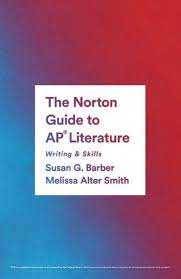
Susan Barber teaches AP® English Literature at Midtown High School in Atlanta, Georgia, and serves as co-chair of the AP® Literature Development Committee. She is the coauthor of The Norton Guide to AP® Literature: Writing & Skills (2022) and 100% Engagement: 33 Lessons to Promote Participation, Beat Boredom, and Deepen Learning in the ELA Classroom (2025). Susan is most proud of the work she does on a daily basis in E216 and never tires of the beauty and chaos of the classroom.